
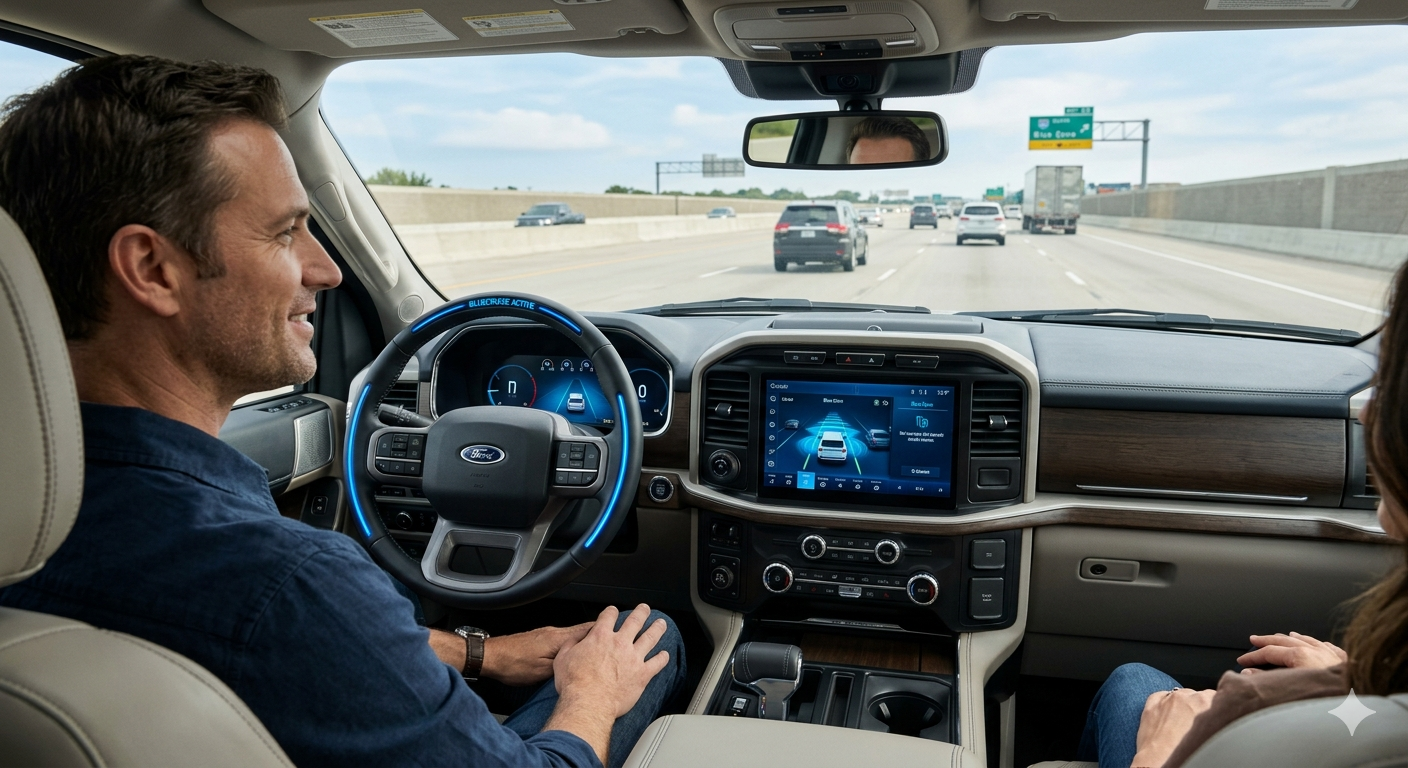
Introduction We are on the cusp of a revolution in mobility, where the role of the driver is transitioning from active operator to passive supervisor. While fully autonomous, driverless cars (SAE Level 5) remain a future prospect, Advanced Driver Assistance Systems (ADAS) are already transforming the daily commute. Ford Motor Company has aggressively entered this space with BlueCruise, its hands-free highway driving technology. This shift toward vehicle automation is driven by sophisticated software, artificial intelligence, and a massive influx of real-world data, creating a new frontier for automotive safety, convenience, and cybersecurity.
Understanding Ford BlueCruise: Hands-Free, Not Brain-Free Ford BlueCruise is classified as an SAE Level 2 autonomous system. It allows a driver to operate hands-free on specific sections of pre-mapped divided highways, known as “Hands-Free Blue Zones,” which cover over 130,000 miles in North America. Unlike basic adaptive cruise control, BlueCruise utilizes a combination of radar and camera technologies, integrated with GPS and high-definition maps. The system handles steering, acceleration, and braking. However, the critical component is the driver-facing camera in the instrument cluster. This camera monitors the driver’s gaze and head position to ensure they are actively paying attention to the road. If the driver looks away for too long, the system prompts them to retake control, maintaining a crucial layer of safety and driver accountability.
The Software-Defined Vehicle and Over-the-Air (OTA) Updates The true power of systems like BlueCruise lies in their ability to evolve. Ford vehicles are now “software-defined vehicles.” Through FordPower-Up OTA updates, Ford can remotely improve vehicle performance, add new features to BlueCruise (such as Lane Change Assist and Predictive Speed Assist), and deploy safety patches without the customer visiting a dealership. This continuous improvement model keeps the vehicle modern and increases its long-term value, but it also elevates the importance of the software infrastructure behind the car.
High-Value Implications: Data, Liability, and Cybersecurity The proliferation of ADAS technology like BlueCruise creates several high-CPC markets:
-
Automotive Cybersecurity: As vehicles become more reliant on software and external data connections, the risk of hacking increases. This drives massive investment and advertising spend from specialized automotive cybersecurity firms.
-
The Shift in Liability (Insurance): As systems take over more driving functions, the question of liability in accidents becomes complex. If a vehicle crashes while BlueCruise is engaged, is the driver or the manufacturer responsible? This dilemma forces insurance companies to develop complex new risk models and data-driven policies, making “autonomous vehicle insurance” a high-bid keyword.
-
Data Monetization and Mapping: High-definition mapping (lidar-scanned maps) is essential for Level 2+ systems. Companies specializing in geospatial data, satellite imaging, and AI data processing see massive value in this ecosystem.
Conclusion Ford BlueCruise is a significant step toward the future of mobility, prioritizing safety and driver convenience through advanced technology. The shift toward software-defined, partially automated vehicles is rewriting the rules of automotive engineering and creating entirely new industries dedicated to securing, insuring, and powering the data-driven driving experience.