
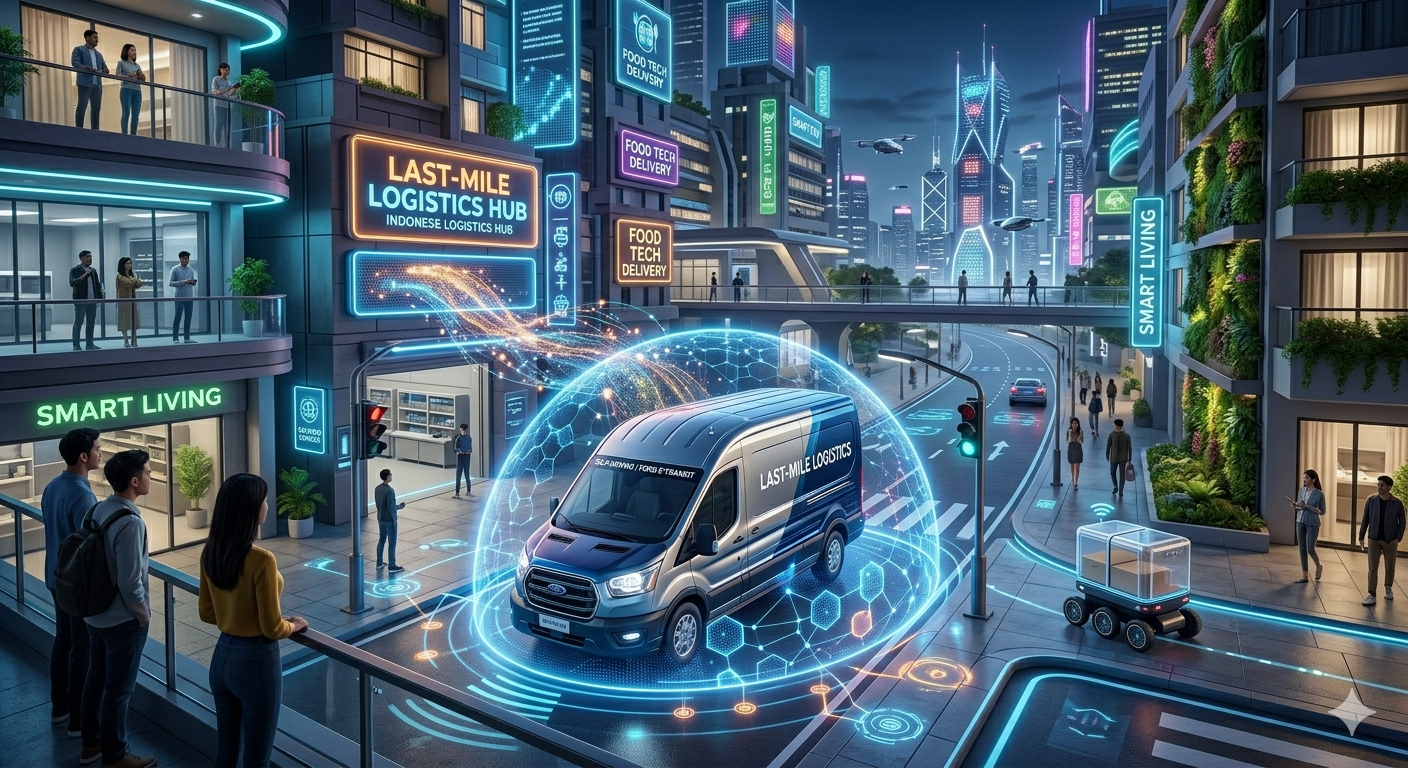
Introduction The promise of autonomous vehicles (AVs) extends far beyond the convenience of a hands-free commute. We are on the precipice of a revolution that will reshape our cities, redefine how goods are delivered, and disrupt multi-trillion dollar industries like logistics and real estate. Ford Motor Company is at the forefront of this transformation, with a dedicated autonomous vehicle division focused on developing not just the technology but the surrounding ecosystem. Ford’s strategic approach to autonomy emphasizes solving complex real-world challenges, particularly in urban environments and last-mile logistics, thereby unlocking massive economic value and defining the future of the autonomous city.
Targeting the Last-Mile Challenge While high-speed highway autonomy grabs headlines, Ford recognized that the most complex and valuable opportunity is in the urban environment, particularly the “last mile” of delivery. This is the final and often most expensive and inefficient leg of the logistics chain.
-
Autonomous Delivery Ecosystems: Ford is developing a comprehensive ecosystem that includes not just the autonomous vehicle itself but the peripheral technologies and partnerships required for seamless delivery. This includes everything from the digital platform that manages the delivery process to the robotic systems that can automate the final steps of package delivery (e.g., automated sidewalk robots or package drop-off systems).
-
AV-as-a-Service (AVaaS): Ford envisions a future where businesses can access autonomous delivery and mobility services on a subscription or per-use basis. This “AV-as-a-Service” model democratizes access to autonomous technology, allowing businesses of all sizes to leverage its benefits without the massive capital investment of owning an AV fleet.
The Urban Impact: Reshaping Infrastructure and Real Estate The integration of autonomous vehicles into urban environments will have a profound impact on city planning and real estate:
-
Repurposing Urban Space: AVs, particularly when utilized in shared mobility or delivery fleets, can operate more efficiently than human-driven vehicles. This can lead to a significant reduction in the need for urban parking spaces, freeing up valuable real estate for other uses, such as housing, green spaces, or commercial development.
-
Disrupting Commercial Real Estate: The rise of autonomous delivery will alter the optimal location and design of distribution centers and retail spaces. This drives significant interest from developers and investors in “autonomous-ready commercial real estate” and “future-proof logistics centers.”
-
Smart City Infrastructure: The successful deployment of AVs requires a sophisticated network of sensors, communication technologies, and data processing capabilities. This creates massive investment and advertising spend from specialized smart city technology providers and “V2X (Vehicle-to-Everything) communication” firms.
Conclusion Ford’s autonomous vehicle strategy is not merely about selling cars; it is about building the foundation for the future of urban mobility and logistics. By focusing on solving complex urban challenges and building comprehensive AV ecosystems, Ford is positioning itself not just as a vehicle manufacturer, but as a key architect of the autonomous city. The economic implications of this transition are far-reaching, creating new markets for autonomous technologies and services and driving significant consumer and corporate interest in the broader autonomous vehicle ecosystem, from smart city infrastructure to future-proof logistics and real estate.